
Self-Compassion Break
What is Self-Compassion?
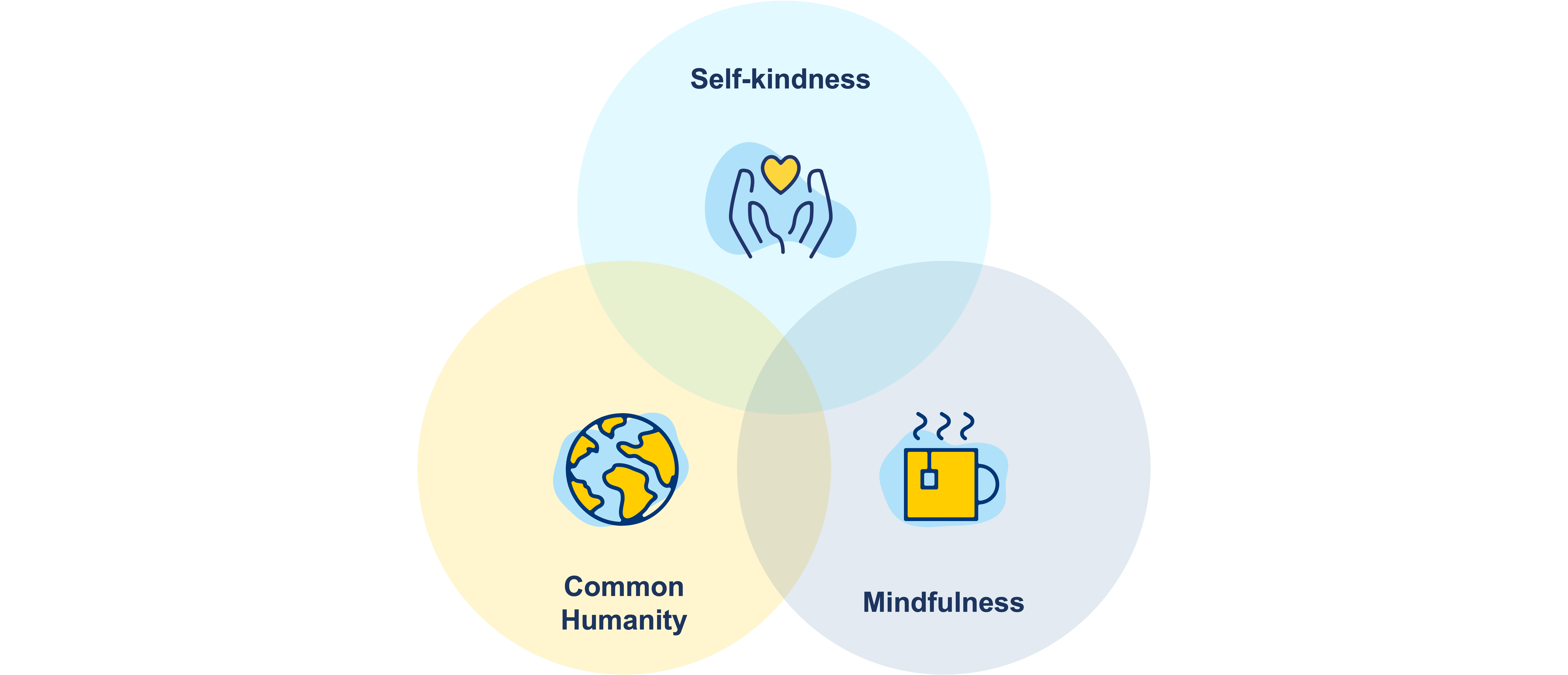
Self-compassion, as defined by experts Dr. Kristen Neff and Dr. Christopher Germer, involves treating yourself with kindness, care, and understanding when faced with challenges instead of being self-critical. It involves three key elements:
Mindfulness (presence): Holding space for your emotions without over-identifying with them, allowing them to come and go without judgment.
Self-Kindness (loving self): Being gentle and understanding with yourself, especially in times of difficulty.
Common Humanity (connected): Recognizing that suffering is part of the shared human experience, rather than isolating yourself.
Why is Self-Compassion Important?
The purpose of self-compassion is to become your own supportive guide. It’s about discovering a practice that helps manage stress, promotes emotional well-being, and strengthens resilience. Ideally, each act of self-compassion should reduce stress, effort, and pressure—rather than increase them. This is done by encouraging you to navigate difficult moments with a sense of care rather than self-judgment.
A key question in self-compassion is, "What do I need right now?" When facing challenges, it’s easy to get caught up in problem-solving without acknowledging how difficult the moment may feel. By fostering a loving and mindful presence, we can shift our relationship with ourselves, our eating habits, and the world around us.
Below is a short practice to try when you are having an emotionally difficult moment.
Self-Compassion Break - Guided Example
Step 1: Notice the pain (Mindfulness) Place a hand over your heart or somewhere on your body that feels comforting. Gently acknowledge what you're feeling, without judging or trying to fix it.
“This is a moment of suffering.” “This is really hard right now.” “I’m feeling fear… grief… shame… confusion.” (Use whatever words feel true for you.)
Step 2: Remember you’re not alone (Common Humanity) Remind yourself that suffering is part of being human. You’re not broken—you’re human. And you're not alone in what you're feeling.
“Many people feel this way.” “Others going through cancer or recovery have felt this too.” “I’m not the only one who struggles with this.”
Step 3: Offer yourself kindness (Self-Kindness) Ask yourself what you need in this moment. Speak to yourself the way you would to a dear friend going through the same thing. You can place a hand on your heart or belly as you say these words.
“May I be kind to myself right now.” “May I allow myself to rest.” “May I trust my body, even as it heals.” “It’s okay to feel this. I’m doing the best I can.”
You can do this practice silently, whisper it to yourself, or write it down in a journal. Even 1–2 minutes can make a real difference when you're caught in a wave of shame, guilt, or self-criticism.